


Conditional Green Card and Spouse Refusing to Help: What Are Your Options?
-
 Moumita Rahman
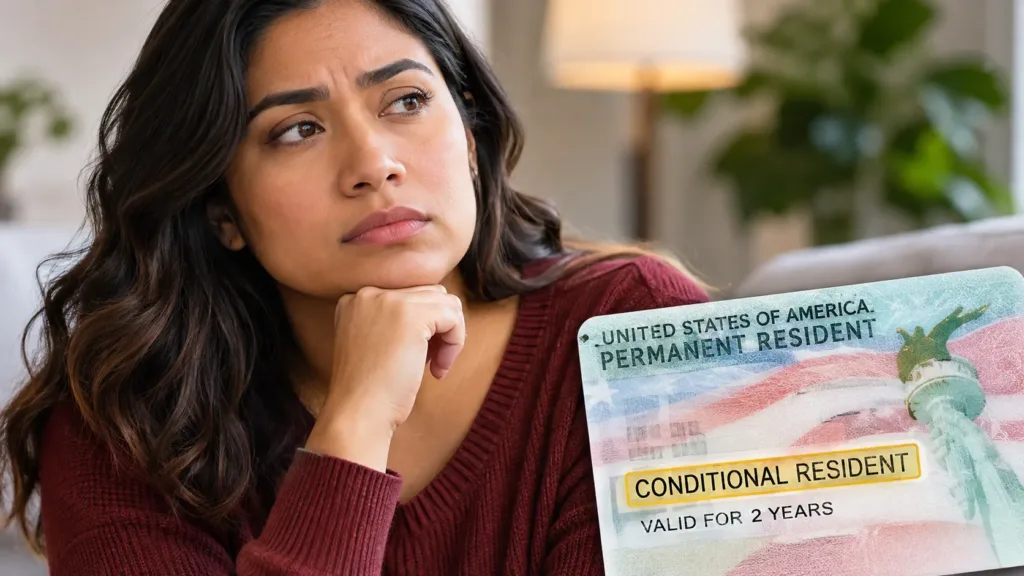
If you have a two-year green card, you may need your spouse’s help to get a 10-year card. But what if your spouse will not sign the forms? What if you are separated or getting a divorce? You may still have options. The right path depends on your marriage and your immigration history.
Some people can file Form I-751 without their spouse. In many cases, they need an I-751 waiver. A waiver is a request for USCIS to excuse the rule that both spouses must file together. But a spouse’s refusal to sign is not enough by itself. This guide explains when you may be able to file alone, what proof you may need, and why deadlines matter.
Can You Remove Conditions Without Your Spouse?
Yes. Some people with a two-year green card can file Form I-751 on their own. You may have this option if your marriage ended in divorce, you faced abuse during the marriage, or removal from the United States would cause extreme hardship. You may also be able to file alone if your spouse died. Each situation has its own rules.
Your spouse’s refusal to help does not, by itself, qualify you to file alone. You must meet one of the legal rules for filing without your spouse. The rules are found in 8 CFR 216.5.
Watch: Can You Remove Conditions From Your Green Card Without Your Spouse?
In this video, Immigration Attorney Moumita Rahman discusses I-751 options for people who are separated, going through a divorce, or dealing with a spouse who will not help.
What Is a Two-Year Conditional Green Card?
A two-year conditional green card is usually given to someone who became a permanent resident through a marriage that was less than two years old at that time. To ask for a 10-year green card, the person normally files Form I-751. This form asks USCIS to remove the conditions on their residence. USCIS must approve the request before the conditions are removed.
Many couples file Form I-751 together. Both spouses usually sign and provide records showing they married in good faith. This means they intended to build a real marriage, not get married only for immigration benefits.
What Options May Apply If Your Spouse Will Not Sign Form I-751?
1. Your divorce or annulment is final
If you entered a real marriage and later got divorced, you may be able to file Form I-751 without your spouse. This is called a divorce waiver. The same may apply if a court annulled your marriage. An annulment is a court ruling that a marriage was not legally valid. Being separated is not the same as being divorced.
What if your divorce is not final yet? USCIS may send a Request for Evidence (RFE). This is a letter asking you for more documents. In some cases, USCIS lets a person send the final divorce papers while the I-751 is being reviewed. But if the divorce is not final in time, USCIS may deny the waiver. If you already filed with your spouse, you may be able to ask USCIS to change that filing later. The dates and details of your case matter.
2. You experienced battery or extreme cruelty
You may be able to file alone if you married in good faith and your U.S. citizen or permanent resident spouse abused you or your child during the marriage. This can include physical abuse or other serious harm, called extreme cruelty. You do not have to get divorced to request this type of waiver.
Extreme cruelty can include serious threats, emotional abuse, sexual abuse, or harmful control. Physical violence is not always required. But a spouse refusing to sign a form does not, by itself, prove abuse. USCIS looks at what happened and the proof you provide.
For more about immigration-related threats and control, read our article When Your Spouse Uses Immigration Status to Control You: VAWA and Other Legal Options.
3. Removal from the United States would cause extreme hardship
You may qualify for a hardship waiver if being forced to leave the United States would cause you extreme hardship. This means harm greater than the difficulties people normally face when they must leave the country. USCIS focuses on hardship during your two years as a conditional resident. Some problems may have started earlier but continued during those two years. This waiver has different rules from divorce and abuse waivers, including rules about proof of the marriage.
4. Your spouse died
If the spouse who helped you get your two-year green card died, you may be able to file Form I-751 on your own. You generally need proof of the death and evidence that you entered the marriage in good faith. USCIS treats this as filing alone, rather than one of the three waiver reasons above.
What If You Are Still Married but Your Spouse Simply Refuses?
If you are still married, and your spouse refuses to sign, their refusal alone does not qualify you for a waiver. The answer depends on what happened during your marriage and whether you already filed Form I-751. If you filed together and your situation later changed, USCIS may allow you to ask for a change to the pending case. You will need proof that supports your request.
When Can You File, and What If Your Card Has Expired?
Most couples who file Form I-751 together must file during the 90 days before their two-year green card expires. Filing a joint petition too early may lead USCIS to reject it.
Waivers have different timing rules. Some people can ask for a waiver before or after the normal 90-day period. But the rules still have limits. For example, a waiver cannot be requested after a final order of removal from the United States. Some abuse-based waivers can also be filed after conditional status ends if the person has not left the country. An expired green card does not always mean you have lost every option. It also does not mean you have unlimited time. Late joint filings follow separate rules.
If your card has expired, you missed a deadline, or you received papers from immigration court, your next step may be different. Our team can review those dates and documents with you. Reach out to us today to discuss your immigration options.
What Evidence Can Help If Your Spouse Will Not Cooperate?
USCIS may ask you for proof that you married in good faith. This means you planned to build a real life together, not marry only for immigration papers. Proof may include a lease, bank statements, tax records, insurance papers, children’s birth certificates, photos, or letters from people who know you. You may have some of these records even if your spouse will not help.
Other proof depends on why you are filing alone. For a divorce waiver, you may need your final divorce papers. If your spouse died, you need a death certificate. For an abuse waiver, you may use messages, your own statement, or records from a doctor, school, or court. USCIS must consider any credible evidence in qualifying abuse cases. No single document guarantees approval.
What Happens After USCIS Receives Form I-751?
After you file Form I-751, USCIS may ask for more proof or schedule an interview. Under current USCIS policy, a receipt notice for a properly filed I-751 extends proof of your status and work authorization for 48 months past the expiration date on your green card. The notice is not an approval of your I-751.
Frequently Asked Questions
Can my spouse cancel my green card by refusing to sign?
Your spouse does not make USCIS’s final decision. But refusing to sign may prevent a joint petition, so you may need to assess other filing options.
Do I need a divorce to file without my spouse?
Not always. The abuse and extreme hardship waiver grounds have different requirements. A divorce waiver needs a legally ended marriage.
Is an I-751 waiver the same as a VAWA self-petition?
No. An I-751 waiver is for someone who already has a two-year marriage-based green card and wants the conditions removed. A VAWA self-petition is a different request, usually made on Form I-360. The right form depends on your immigration status and what happened in your case.
Talk With The Law Firm of Moumita Rahman About Your I-751 Options
If your spouse will not help with your I-751, our immigration team can review your timeline, marriage history, and available evidence to discuss which options may fit. Learn about our I-751 removal of conditions services or contact our team to request a case evaluation.
This article provides general information, not legal advice. Reading it does not create an attorney-client relationship. The correct filing approach depends on your facts and current USCIS rules.

Information verified by attorney Moumita
With over 15 years of experience in immigration law, she has represented hundreds of clients in a wide range of cases – from family petitions and green card applications to complex deportation defense. Her greatest passion is giving hope to those with complicated cases who believed they had no options left.